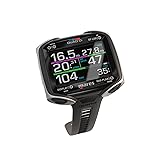
Mares Quad Ci
Mid-range value with gradient factor control
⚠ Affiliate link — we earn a commission at no cost to you. Always verify equipment compatibility before purchase.
An air integrated dive computer costs between $400 and $1,500 depending on display type, transmitter technology, and feature set. The computer itself is only part of the investment — most systems require a separately purchased wireless transmitter adding $250 to $500, bringing the total entry cost for a hoseless air integrated setup to approximately $650 at the budget end and over $2,000 at the premium end.
The sticker price on any air integrated dive computer tells you less than half the story. Most buyers discover the transmitter cost — usually $300 or more — only after they have already committed to a computer. This guide breaks down every tier so you know exactly what to budget before you buy.
The price of an air integrated dive computer reflects four cost components: the wrist computer itself, the wireless transmitter, the decompression algorithm and sensor engineering, and the display technology. Understanding what drives cost at each tier helps you identify where your budget delivers the most value.
The decompression algorithm — Bühlmann ZHL-16C or one of the RGBM variants — is similar in practical function across price tiers. A $400 dive computer and a $1,400 dive computer can run the same underlying algorithm. You are not paying for a safer decompression calculation at the premium end. What changes as price rises is display quality, build material, and the depth of features available to the diver.
The three primary cost drivers are display technology, housing materials, and feature set. A monochrome LCD screen costs a manufacturer a fraction of a full-colour AMOLED panel — and that cost difference flows directly to the retail price. Housing materials follow the same logic: polymer is inexpensive; 316 stainless steel and titanium are not. Feature depth — recreational-only modes versus multi-gas trimix and CCR capability — adds engineering cost that also appears in the final price.
Display technology is the single biggest price differentiator between dive computers. A monochrome LCD costs manufacturers far less than a full-colour AMOLED screen. The decompression algorithm — Bühlmann ZHL-16C or RGBM variants — is functionally similar across price tiers. You are paying for the display, build materials, and feature depth, not a fundamentally different safety calculation.
The display cost ladder is straightforward. Computers in the $300–$500 range typically use a monochrome segmented LCD — legible but not colour-coded, and requiring the diver to read numbers rather than interpret colour status. The $500–$1,000 bracket introduces colour LED and MIP transflective displays — significantly more readable underwater, with colour-coded alerts and a navigable digital compass. Above $1,000, AMOLED panels deliver contrast and brightness that remain clear at depth, in low light, and at night without manual backlighting adjustments.
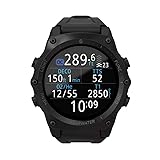
Build materials follow a similar progression. Entry-level computers use polymer housings that are light and durable for recreational use. Mid-range computers introduce stainless steel bezels for improved durability and scratch resistance. Premium computers — the Shearwater Teric and Garmin Descent lines — use 316 stainless steel and titanium respectively, with sapphire crystal screens that resist scratching across years of regular diving. Feature depth adds further cost: basic models handle air and Nitrox; premium models add gradient factor control, multi-gas trimix capability, CCR mode, sidemount configuration, and closed-circuit rebreather support.
Most air integrated dive computers are sold without a transmitter included. The transmitter is a separate purchase ranging from approximately $250 for a basic model to $500 for premium units like the Garmin Descent T2. Always check whether a listing includes the transmitter or is computer-only before comparing prices.
This is the most common pricing surprise in the category. A listing that describes a computer as "air integrated" typically means the wrist unit supports wireless air integration — it does not mean the transmitter is included. Buyers who compare a $600 computer-only price against a $800 bundle price are not comparing like for like. Always read the listing carefully and search for the word "transmitter" in the box contents before purchasing.
Approximate transmitter prices as of mid-2026: Suunto Tank POD ~$280–$350; Shearwater SWIFT ~$350–$400; Garmin Descent T1 ~$350–$400; Garmin Descent T2 ~$500; Scubapro LED Smart+ ~$350–$400; Mares LED Transmitter ~$300–$380. Transmitters are brand-specific — they are not cross-compatible between manufacturers. For a complete guide to which transmitters work with which computers, see our transmitter compatibility guide (coming soon).
Air integrated dive computer pricing falls into four broad tiers: console systems under $500, budget wireless setups from $650 to $900 total, mid-range systems from $900 to $1,400, and premium systems above $1,400. Each tier represents a meaningful step up in display quality, transmitter capability, and feature depth.
| Tier | Computer Price | Transmitter Cost | Total System Cost | Display Type | Example Models |
|---|---|---|---|---|---|
| Console (hose-connected) | $250–$500 | Included (HP hose) | $250–$500 | Monochrome LCD | Oceanic ProPlus 4.0 |
| Budget wireless | $400–$600 | $250–$350 | $650–$900 | Monochrome or basic colour | Oceanic Geo Air, Mares Smart Air |
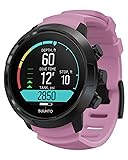
| Mid-range wireless | $600–$1,000 | $280–$400 | $900–$1,400 | Colour LED/MIP, digital compass | Suunto D5, Mares Quad Ci, Scubapro G2 |
| Premium wireless | $1,000–$1,500 | $350–$500 | $1,400–$2,000+ | AMOLED, multi-gas, GF control | Shearwater Teric, Garmin Descent Mk2i/Mk3i |
Prices are approximate US retail as of mid-2026. Transmitter costs assume wireless (hoseless) air integration. Always verify current pricing before purchase.
The most affordable way to get air integration. The computer connects to your tank via a standard high-pressure hose rather than a wireless transmitter, so there is no separate accessory to buy. The trade-off is a bulkier setup — the console sits on the regulator hose rather than on your wrist — and you must physically raise the console to read tank pressure rather than glancing at your wrist between kicks.
Entry-level hoseless air integration. Computers in this range typically use monochrome or basic colour displays and cover recreational modes only — air and Nitrox. Bluetooth dive logging may or may not be included depending on the model. These serve recreational divers who want the convenience of wrist-mounted air pressure data without paying for premium display technology or technical diving features they will not use.
Where most serious recreational divers and advanced Open Water divers land. Colour displays, digital compass, Nitrox support at configurable FO2 levels, and Bluetooth logbook sync are standard at this tier. The Suunto D5 and Mares Quad Ci are representative examples. These computers serve most divers comfortably from Open Water through Advanced, Rescue, and Divemaster certifications without feeling like an overspend.
Technical diving capability paired with the best available displays. AMOLED screens, user-adjustable gradient factors, multi-gas trimix, CCR mode, and sidemount configurations are accessible in this bracket. The Shearwater Teric and Garmin Descent Mk2i and Mk3i define this tier. These are instruments that professional instructors and technical divers rely on for demanding conditions, but they equally suit recreational divers who simply want the best display and most intuitive interface available.
The purchase price is not the full cost of owning an air integrated dive computer. Transmitter batteries need replacing every one to three years depending on dive frequency, and some computers use rechargeable batteries with a limited lifespan. Budget an additional $20 to $50 per year for battery and O-ring maintenance across both the computer and transmitter.
Most wireless transmitters use a CR2 lithium battery lasting 100 to 300 dive hours. A replacement CR2 battery costs approximately $5 to $8. The O-ring should be replaced with each battery change — kits typically cost $5 to $15. Annual battery maintenance cost is minimal but skipping it risks a flooded transmitter worth hundreds of dollars.
Battery types vary by brand: CR2 lithium cells are used in the Shearwater SWIFT and Garmin T1; the Scubapro LED Smart+ uses a CR2450 coin cell; Suunto's Tank POD uses a ½ AA lithium cell; the Garmin T2 uses a CR123 cell; the Mares transmitter uses a 14250 lithium cell. All are available at electronics retailers worldwide, which matters for travel divers who might need a replacement during a liveaboard trip. The battery cost itself is negligible — typically under $10 — but the O-ring replacement that must accompany every battery change is the step most divers skip, and a compressed or cracked O-ring is the leading cause of flooded transmitters.
Transmitter servicing is straightforward if you follow the manufacturer's procedure: open the cap in a dry environment, replace the battery and O-ring together every time, inspect the threads and seating surface, and torque the cap to specification. Many dive shops offer transmitter battery services for $20 to $40 including parts, which is worth the peace of mind for a component that costs $300 to $500 to replace if flooded.
User-replaceable battery computers cost $5 to $10 per battery change every one to two years. Rechargeable models like the Shearwater Teric and Garmin Descent eliminate battery costs but use proprietary charging cables that cost $20 to $40 to replace if lost. Wireless Qi charging on the Teric is an exception — any standard phone charger works.
The rechargeable versus user-replaceable trade-off has real-world implications for travel divers. A user-replaceable battery — typically a CR2450 or CR2032 coin cell — costs under $10 at any pharmacy, airport, or electronics shop worldwide. You never have a dead computer if you cannot find a specific charging cable. Rechargeable computers like the Teric (Qi wireless) and Garmin Descent (proprietary USB cable) are more convenient at home and on liveaboards with cabin power, but a lost or forgotten charging cable during a remote trip creates a problem that a coin cell never does. The Teric's Qi compatibility partially addresses this — any phone charger works — but the Garmin's proprietary cable is genuinely worth packing a spare of.
Buying a dive computer and transmitter as a bundled package typically saves 10 to 15 per cent compared to purchasing them separately. Suunto frequently offers D5 + Tank POD bundles on Amazon. Shearwater sells the SWIFT separately but authorised retailers sometimes offer Teric + SWIFT packages. Garmin typically sells the Descent computer and T1 or T2 as separate items.
Bundle availability changes seasonally and by retailer, so it is worth checking Amazon and authorised dive retailer sites before committing to a computer-only purchase. The Suunto D5 + Tank POD bundle is the most consistently available pairing in the mid-range tier and typically saves $40 to $70 versus the two items purchased separately. At the premium end, bundles are less common — Garmin and Shearwater generally list items separately — but some specialist dive retailers offer their own packages that may include accessories like screen protectors, carry cases, or service vouchers.
The most important habit when shopping for an air integrated system is to always compare total system cost rather than computer-only prices. A computer listed at $599 that requires a $380 transmitter has a $979 system cost. A bundle listed at $849 for both is cheaper — but only if you are reading all listings on the same basis. Use total system cost as your comparison metric every time.
The price premium for air integration over a comparable non-integrated dive computer is typically $300 to $700, plus the cost of a transmitter. Whether this is worth it depends on how much you value having tank pressure, gas time remaining, and SAC rate data on a single wrist-mounted screen versus checking a separate SPG console during each dive.
The case for air integration is primarily one of convenience and data depth. A wrist-mounted computer that displays tank pressure, gas time remaining (GTR), and surface air consumption (SAC) rate gives you all critical dive information in one glance. There is no dangling SPG hose to manage, no regulator console to hold up during a safety stop, and no second instrument to check before surfacing. For divers who track their breathing rate to improve buoyancy and gas efficiency, the SAC rate data is genuinely useful feedback that a standalone computer cannot provide.
The case against is equally straightforward. A submersible pressure gauge on a hose is mechanically simple, requires no batteries, and has no signal to lose. It will show your tank pressure reliably in every conceivable condition. The wireless transmitter adds a component that requires battery maintenance and — very occasionally — signal dropouts in heavy electrical interference. The additional cost of $300 to $700 over a non-integrated equivalent could alternatively be spent on training, additional dives, or other equipment upgrades.
Divers Alert Network (DAN) and most dive training agencies recommend carrying a backup SPG even when using wireless air integration, particularly on technical or overhead dives where a transmitter failure could leave you without pressure data at a critical moment. This means air integration does not necessarily eliminate the SPG from your kit — it may simply move it to a backup role. For a detailed look at what SAC rate and GTR data actually gives you in practice, see our SAC rate and air consumption guide (coming soon).
Amazon is typically the most price-competitive retail channel for air integrated dive computers in the US market, with frequent bundle deals and seasonal discounts. Authorised dive retailers may match pricing and sometimes include additional warranty coverage. Always verify you are purchasing from an authorised dealer to maintain the manufacturer warranty.
Amazon prices on dive computers fluctuate regularly. The most consistent discount windows are Prime Day (July), Black Friday (November), and end-of-season sales in October. Setting a price alert using a browser extension or checking back monthly around these periods can result in savings of 10 to 20 per cent on both computers and transmitters. Suunto D5 and Mares Quad Ci bundles in particular see meaningful seasonal discounts on Amazon. Shearwater and Garmin hold price more consistently but occasionally appear in third-party seller promotions.
Authorised dive retailers — local dive shops and specialist online retailers — offer pricing that is usually comparable to Amazon and sometimes includes services Amazon cannot provide: hands-on setup, calibration advice, and direct manufacturer warranty support. Some manufacturers, including Shearwater and Garmin, sell directly through their own websites, which guarantees authentic products and often provides faster warranty service. Avoid grey market sellers and unauthorised third parties regardless of the apparent price saving — most dive computer warranties are void if purchased outside the authorised dealer network, which matters when a $1,000 instrument develops a fault.
The most affordable wireless air integrated dive computers start at approximately $400 to $500 for the computer alone. With a transmitter, the total entry cost for a hoseless system is around $650. Console-style air integrated computers — which connect via an HP hose rather than wirelessly — can be found for under $500 total, making them the cheapest way to get air integration on a dive computer.
In most cases, yes. The majority of air integrated dive computers are sold as the wrist unit only — the wireless transmitter is a separate purchase. Some retailers and brands offer bundle packages that include both at a discount. Always check what is included in the box before purchasing, especially on Amazon where listing descriptions vary.
A replacement wireless transmitter typically costs between $250 and $500 depending on the brand. Shearwater SWIFT and Suunto Tank POD transmitters sit in the $280 to $400 range, while the Garmin Descent T2 with enhanced SubWave messaging capability costs approximately $500. Transmitters are not cross-compatible between most brands — switching your dive computer brand usually means buying a new transmitter as well.
Yes, significantly. Console-style air integrated computers — which connect to your tank via an HP hose rather than a wireless transmitter — typically cost $250 to $500 total. Wireless systems start at approximately $650 for the computer plus transmitter. The trade-off is that console computers are bulkier and require you to physically look at the gauge rather than checking your wrist.
Most dive computer transmitters use a CR2 or similar lithium battery that lasts 100 to 300 dive hours, which translates to roughly one to three years for an active recreational diver averaging 50 dives per year. The battery itself costs $5 to $8. The O-ring seal should be replaced at the same time — budget $10 to $20 total per battery service.
Three picks across the mid-range and premium tiers — all with verified affiliate links. Prices fluctuate; check Amazon for the current listing before purchasing.
Mid-range value with gradient factor control
⚠ Affiliate link — we earn a commission at no cost to you. Always verify equipment compatibility before purchase.
Colour touchscreen with accessible air integration
⚠ Affiliate link — we earn a commission at no cost to you. Always verify equipment compatibility before purchase.
The benchmark for dedicated divers
⚠ Affiliate link — we earn a commission at no cost to you. Always verify equipment compatibility before purchase.