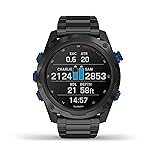
Shearwater Teric
Displays SAC rate, GTR, and gas pressure in real time
⚠ Affiliate link — we earn a commission at no cost to you. Always verify equipment compatibility before purchase.
Surface Air Consumption (SAC) rate measures how much breathing gas a diver uses per minute, normalised to surface pressure. It is expressed in litres per minute or cubic feet per minute. Most recreational divers have a SAC rate between 0.5 and 0.8 CFM (14–23 L/min). An air integrated dive computer calculates SAC rate automatically in real time, replacing the manual post-dive calculation with a live feed that updates with every breath.
SAC rate is the single most important number for gas management. Knowing it lets you estimate how long your tank will last, plan turn pressures, and track your improvement as a diver. This guide covers the manual calculation, how air integrated computers automate it, the difference between GTR and RBT, and six practical ways to improve your efficiency.
SAC rate answers the most fundamental question in gas management: how fast am I using my air? Knowing your personal SAC rate lets you estimate how long a tank will last at any given depth, plan turn pressures for safe ascents, and track your efficiency improvements over time. It is the number that connects your breathing to your dive planning.
SAC rate — also called RMV (Respiratory Minute Volume) in metric contexts — is expressed as gas consumption normalised to surface pressure (1 ATA). The normalisation is the key. If you measured your gas consumption directly at 20 metres, the number would double compared to the surface because the regulator is delivering gas at twice the pressure. By normalising to the surface, SAC rate becomes a stable personal baseline that you can compare across dives at any depth.
The practical application is straightforward. A diver with a SAC rate of 0.6 CFM diving at 66 feet (3 ATA) consumes 0.6 × 3 = 1.8 cubic feet per minute of actual gas at depth. An AL80 tank contains 80 cubic feet, so after reserving 20 cubic feet for the ascent, 60 cubic feet is available for the dive — yielding approximately 33 minutes at that depth and consumption rate. This is dive planning in its simplest and most reliable form. PADI and Divers Alert Network both recommend divers know and track their personal SAC rate as part of responsible gas management.
To calculate SAC rate manually, you need four numbers: starting tank pressure, ending tank pressure, average depth, and elapsed time. The formula normalises your gas consumption at depth back to what it would be at the surface, giving you a comparable number across different dive profiles.
SAC rate equals the pressure drop divided by time, divided by the depth in atmospheres absolute. In imperial units: SAC in PSI per minute equals the pressure used, divided by the dive time in minutes, divided by the average depth in feet divided by 33 plus 1. To convert to cubic feet per minute, divide by the tank's rated pressure and multiply by its volume.
The Formula (Imperial)
SAC (PSI/min) = (Start PSI − End PSI) ÷ Time (min) ÷ ATA
ATA = (Depth in feet ÷ 33) + 1
SAC (CFM) = SAC (PSI/min) ÷ Tank Rated PSI × Tank Volume (cf)
Worked Example — AL80 tank, 66 ft average depth, 30-minute dive
Start: 3,000 PSI | End: 1,200 PSI
Step 1 — Pressure used: 3,000 − 1,200 = 1,800 PSI
Step 2 — Consumption rate at depth: 1,800 ÷ 30 = 60 PSI/min
Step 3 — Depth in ATA: (66 ÷ 33) + 1 = 3 ATA
Step 4 — SAC rate in PSI/min: 60 ÷ 3 = 20 PSI/min
Step 5 — Convert to CFM: (20 ÷ 3,000) × 80 = 0.53 CFM
This method works best when you swim at a relatively constant depth for the majority of the dive. Multi-level profiles — descending, exploring a reef wall, then ascending through shallower zones — make manual calculation less precise because the average depth figure becomes an approximation. This is where air integrated computers have a significant advantage: they calculate SAC rate continuously at every depth throughout the dive, producing a more accurate picture of your true consumption.
A typical recreational diver's SAC rate falls between 0.5 and 0.8 cubic feet per minute. New divers often start above 0.8 CFM. Experienced divers with good buoyancy and relaxed breathing may achieve 0.4 to 0.5 CFM. Technical divers planning decompression dives use their personally tested SAC rate for gas calculations, not a generic average.
| Diver Profile | Typical SAC Rate (CFM) | Typical SAC Rate (L/min) |
|---|---|---|
| New or anxious diver | 0.8–1.2+ | 23–34+ |
| Average recreational diver | 0.5–0.8 | 14–23 |
| Experienced, relaxed diver | 0.4–0.6 | 11–17 |
| Highly efficient technical diver | 0.3–0.5 | 8–14 |
Ranges are approximate and vary with conditions, fitness, water temperature, and individual physiology. Your personal SAC rate is the only number that matters for your dive planning.
An air integrated dive computer eliminates the manual calculation entirely. The wireless transmitter sends live tank pressure data to the wrist computer, which combines it with real-time depth readings to calculate SAC rate continuously throughout the dive. Instead of a single post-dive average, you see a live number that responds to every change in your breathing, exertion, and depth.
The mechanics are straightforward. The transmitter reads tank pressure every few seconds and sends the reading to the wrist unit via wireless signal. The computer already knows depth from its pressure sensor. Combining rate of pressure change with current depth and tank volume, it calculates both instantaneous SAC rate and a rolling average — typically over the last two minutes — to smooth out brief exertion spikes.
The live number is a real-time feedback tool. A steady low SAC rate (0.4–0.6 CFM) means you are calm, properly trimmed, and breathing efficiently. A sudden spike — say, from 0.6 to 1.2 CFM — typically signals stress, a burst of hard finning, or a loss of buoyancy requiring a BCD correction. A gradually increasing SAC rate over the second half of a dive may indicate fatigue or the onset of cold, both of which warrant attention. This transforms gas management from a post-dive arithmetic exercise into a real-time conversation with your equipment.
The dive computer's post-dive log stores the average SAC rate for each dive. Over time, comparing SAC rates across dives — different sites, temperatures, and conditions — builds a precise picture of your personal consumption profile. Shearwater computers display SAC rate on a dedicated gas integration screen alongside tank pressure, GTR, and a pressure trend graph.
The transmitter is what makes live SAC tracking possible — see our transmitter compatibility guide to check which transmitter works with your computer.
Gas Time Remaining (GTR) and Remaining Bottom Time (RBT) are different manufacturers' terms for the same core calculation: how many minutes of breathing gas you have left at your current depth and consumption rate. Shearwater uses GTR. Scubapro and Suunto use RBT. The calculation methods differ slightly in what they include.
Shearwater's Gas Time Remaining calculates the minutes of gas remaining at your current depth based on a two-minute rolling average of your SAC rate. It counts down to a user-configurable reserve pressure but does not include ascent time or safety stop gas requirements in the displayed number. Shearwater provides a separate TTS (Time to Surface) display for ascent planning.
GTR is the simpler of the two figures — it answers the question: how long can I stay at this depth before I hit my reserve pressure? It does not account for the gas needed to get back to the surface. Divers using GTR must mentally combine it with the separate TTS (Time to Surface) display to make ascent decisions. This gives experienced and technical divers more granular control over their gas planning, but it does require actively monitoring two numbers rather than one. For most recreational divers, building the habit of watching GTR alongside TTS takes only a few dives.
Scubapro and Suunto's Remaining Bottom Time typically includes the gas needed for a safe ascent plus any required safety or decompression stops. When RBT reaches zero, the computer is telling you it is time to begin your ascent — not that your tank is empty. This more conservative approach means the displayed number accounts for the full return journey to the surface.
RBT is more conservative and arguably more beginner-friendly — it tells you when to turn the dive rather than when the gas runs out. When RBT reads five minutes, the computer has already factored in the gas you will need to ascend and complete a safety stop. The trade-off is less granularity: the ascent gas estimate is based on a standard ascent profile, which may be slightly more or less than what your specific ascent actually requires. For the majority of recreational dives this distinction is academic. For technical dives with staged decompression, understanding exactly what your computer is and is not including in the displayed number becomes critical.
Improving your SAC rate is primarily about improving your fundamental diving skills — buoyancy control, trim, finning efficiency, and breathing technique. Equipment streamlining and thermal protection also play a role. A lower SAC rate means longer dives, better gas reserves, and a greater margin of safety on every dive.
Every unnecessary inflation or deflation of your BCD wastes gas and disrupts your trim. Divers who achieve neutral buoyancy through proper weighting and lung volume control rather than constant BCD adjustments see immediate SAC rate improvements. This is the single highest-impact skill for reducing air consumption.
Proper weighting is the foundation. An overweighted diver constantly adds air to the BCD to compensate for the downward pull, then vents on ascent, then adds again — a cycle that wastes significant gas across a 45-minute dive. A proper weight check at the surface (deflate all gas from BCD, breathe normally — you should float at eye level) establishes the baseline. Fine-tune over several dives with varying exposure suits and tank fills. Once correctly weighted, use lung volume rather than the BCD for minor buoyancy adjustments: inhale slightly to rise, exhale slightly to sink. This is the single technique most responsible for elite divers' low SAC rates.
Slow, deep, controlled breathing is more gas-efficient than rapid shallow breathing. Focus on a full exhale — most divers under-exhale, trapping stale air and reducing gas exchange efficiency. A relaxed four-second inhale and six-second exhale is a common starting rhythm for improving breathing efficiency at depth.
Breathe from the diaphragm, not the chest. The exhale is where most efficiency is gained — extend it, letting your lungs empty more completely before the next inhale. This improves gas exchange and reduces the breathing rate naturally. One important note: skip breathing — deliberately holding your breath between breaths to reduce gas use — is dangerous at depth and should never be practised. The goal is relaxed, rhythmic diaphragmatic breathing, not breath-holding. Conscious breathing practice during low-stimulus moments of a dive (cruising a flat sandy bottom, safety stop) is the fastest way to build the habit.
A horizontal, streamlined body position reduces drag and the effort required to move through the water. Frog kicks are generally more efficient than flutter kicks for most recreational divers. Tuck dangling equipment close to your body — a trailing SPG console or loose octopus creates drag that costs gas on every dive.
Keep your body as horizontal as possible — a vertical or head-high position creates frontal drag that forces harder finning to maintain the same forward speed. The modified frog kick is the most efficient stroke for steady cruising: the power phase moves water rearward with minimal turbulence, and the recovery phase tucks the fins rather than dragging them. Flutter kick works well for quick bursts of speed but is less efficient for sustained swimming. Secure all dangling equipment before descending: clip off the SPG if using a wireless computer, tuck the alternate air source into a BCD pocket or clip, and ensure your BCD pockets are closed. Every piece of kit trailing in the current is drag you are paying for with gas.
Cold divers breathe faster. Appropriate exposure protection for the water temperature reduces the metabolic cost of thermoregulation and directly lowers your SAC rate. On cold water dives, the difference between an adequate wetsuit and an undersized one can increase gas consumption noticeably over a 45-minute dive.
Match your exposure protection to the conditions, not to what fits in your bag. A 3mm suit in 18°C water will leave you cold and breathing hard in the second half of the dive as your core temperature drops. A correctly fitting 5mm or semi-dry suit keeps you warmer, more relaxed, and more gas-efficient throughout. Hood, gloves, and boots reduce heat loss from the extremities — areas often overlooked by divers who focus on torso warmth. Diving warm is diving calm, and calm divers breathe less.
Cardiovascular fitness reduces baseline breathing rate and improves gas exchange efficiency. Equally important is mental relaxation — anxiety and task-loading cause rapid shallow breathing that spikes consumption. Divers who log more bottom time generally see their SAC rate decrease naturally as comfort and confidence increase.
Regular cardiovascular exercise — swimming, running, cycling — improves lung capacity and efficiency, lowering your resting breathing rate both at the surface and at depth. Experience is equally powerful: a diver on their fifth dive is running a constant background program of anxious monitoring that an experienced diver no longer needs, and anxiety has a direct and measurable effect on breathing rate. The most effective long-term SAC rate improvement strategy is straightforward — dive more, in varied conditions, with attention to skill practice rather than just site-seeing.
An air integrated dive computer turns every dive into a training session. Experiment with different fin kicks, breathing patterns, and trim adjustments while watching your SAC rate respond in real time. A drop from 0.7 to 0.5 CFM after switching to frog kicks is not a guess — it is measured proof that the technique works for you.
On your next dive with air integration, try switching between flutter and frog kicks for five minutes each and note the SAC rate displayed on your wrist computer. Try a slower exhale rhythm for five minutes and watch the number respond. These are experiments you can run on any dive without changing your plan. Post-dive, review the SAC rate log to identify the moments consumption spiked — was it navigating a current, a moment of uncertainty, or a buoyancy correction after touching the sand? Each spike is a specific, actionable improvement target. This data-driven approach to skill development accelerates improvement far faster than generic advice alone.
See which of our reviewed dive computers display live SAC rate data on our full dive computer buying guide →
A SAC rate below 0.8 CFM (23 L/min) is a reasonable initial goal for a newly certified diver. Focus on buoyancy control and relaxed breathing first — SAC rate improvements follow naturally. Most divers see their biggest gains in the first 20 to 30 dives after certification as comfort and skill increase.
Setting an arbitrary SAC rate target can create counterproductive anxiety. The better approach is to record your SAC rate on every dive and watch the trend line move downward as your skills develop. Buoyancy practice — slow descents, hovering drills, fin pivot exercises — gives you the fastest returns in the shortest time.
SAC rate is normalised to surface pressure, so a well-calculated SAC should remain relatively consistent across different depths. If your SAC rate increases significantly at greater depth, the likely cause is anxiety, increased gas density making breathing harder, or poor buoyancy control requiring more BCD adjustments. A consistent SAC across depths is a sign of a skilled and relaxed diver.
At depths below 30 metres, the increased gas density does make each breath slightly harder to draw, which can raise SAC rate by 5 to 15 per cent compared to shallow dives. This is normal and expected. A large increase — more than 30 per cent — typically points to a controllable factor: anxiety, poor buoyancy, or unfamiliar conditions.
Yes. The manual method requires a standard SPG, your average depth from your dive computer's log, and the elapsed time. Record your start and end tank pressures, note your average depth, and apply the formula in the calculation section above. Air integration simply automates this and provides the number in real time during the dive rather than as a post-dive calculation.
The manual calculation is perfectly adequate for building awareness of your SAC rate and tracking trends over time. The limitation is precision on multi-level dives — a single average depth figure is a rough approximation of a varying depth profile. For recreational diving, this is rarely a practical concern.
SAC (Surface Air Consumption) and RMV (Respiratory Minute Volume) describe the same concept — your gas consumption normalised to surface pressure. SAC is more commonly expressed in PSI per minute or cubic feet per minute in North American diving. RMV is more commonly expressed in litres per minute in European and technical diving contexts. The calculation method is the same.
If you dive with international instructors or read European dive training materials, you will encounter RMV. If you are in North America, SAC is the standard term. Both describe your surface-normalised breathing rate — the only difference is the label and the unit of measurement. The reference ranges table above lists both CFM and L/min values for direct comparison.
Cold water increases SAC rate because your body burns more energy to maintain core temperature, which increases oxygen demand and breathing rate. Divers typically see a 10 to 30 per cent increase in gas consumption when moving from warm tropical water to cold temperate or cold water conditions. Appropriate thermal protection is the primary countermeasure.
Divers accustomed to warm-water diving should factor a conservative SAC rate uplift into their gas planning when diving in cold water for the first time. A SAC rate of 0.6 CFM in the tropics may become 0.75 CFM in 12°C water, even with similar conditions and skills. Log your cold-water SAC rates separately to build an accurate cold-water baseline.
Three computers that display and log SAC rate in real time with wireless transmitter integration. Verified affiliate links — check Amazon for current pricing before purchasing.
Displays SAC rate, GTR, and gas pressure in real time
⚠ Affiliate link — we earn a commission at no cost to you. Always verify equipment compatibility before purchase.
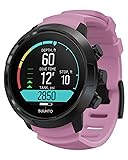
Tracks SAC rate with SubWave transmitter and logs to Garmin Connect
⚠ Affiliate link — we earn a commission at no cost to you. Always verify equipment compatibility before purchase.
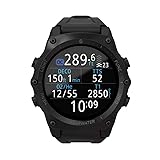
Shows air time remaining (RBT) with Suunto Tank POD integration
⚠ Affiliate link — we earn a commission at no cost to you. Always verify equipment compatibility before purchase.